SuppCo · A closer look
Buying Club
SuppCo’s first commerce product: a members’ club that sells without discounting
SuppCo’s members trusted it to tell them what to take. The Head of Product and I designed how SuppCo would sell to them without spending that trust: a members’ club that pays back credits instead of discounting.
- My role
- Shared design ownership with the Head of Product, through an internal launch, alpha and beta
- Worked with
- Our co-founder, who owned the business, and front-end engineering
- What I designed
- Onboarding, the club hub, credits on the product page, orders and subscriptions, and one membership language across Pro and the club
Alpha told us the checkout worked and the catalog was the constraint.
The situation
SuppCo helps people work out which supplements they can trust. Members had already told us what they take, by building their stack in the app. The Buying Club was SuppCo’s first commerce product: a way to buy those trusted products in the same place, without spending the trust the app had earned.
My role
I shared design ownership with the Head of Product, and a co-founder owned the business. I designed the member’s path end to end: onboarding, the club hub, credits on the product page, orders and subscriptions, and one membership language so that Pro and the club read as one thing.
The idea
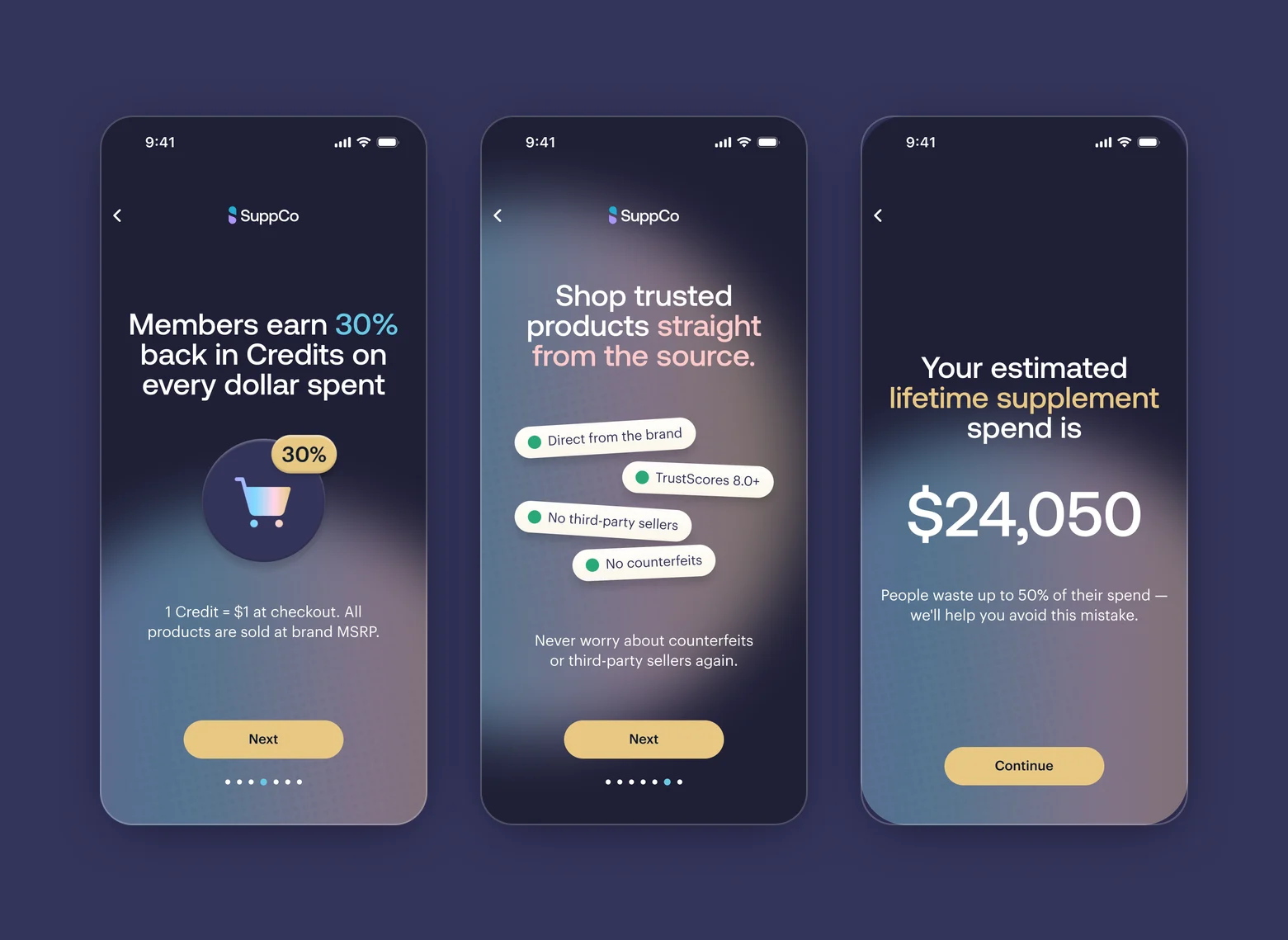
We chose credits over slashed prices, so buying felt like a member benefit. Members earn credits back on every order, and we made that earning visible at each decision: in onboarding, on the product page, and against the stack they already take. Members see what they’re getting, never a slashed price.
The club also isn’t a separate store. It shows up where members already were, on their stack, in search and on home, so buying is the next step of what they came to do. It launched internally, then in alpha and beta rounds while I was there; the full launch followed.
What alpha showed
Alpha answered the question we were most worried about. Members who started an order finished it, and many chose to subscribe. The checkout worked.
It also showed us where the limit was. I gathered member feedback into readouts after each round, and the Head of Product analysed who bought. Together they pointed the same way: members bought when the products they already took were in the club, and mostly didn’t when they weren’t. The constraint was the shelf, not the store. That moved the next round of work from polishing the flow to widening the catalog.
What I learned
- Check the shelf before you polish the store.
- Show the benefit at the moment of decision, not on a pricing page.
- A new way to buy should feel like the next step of what members already do.